

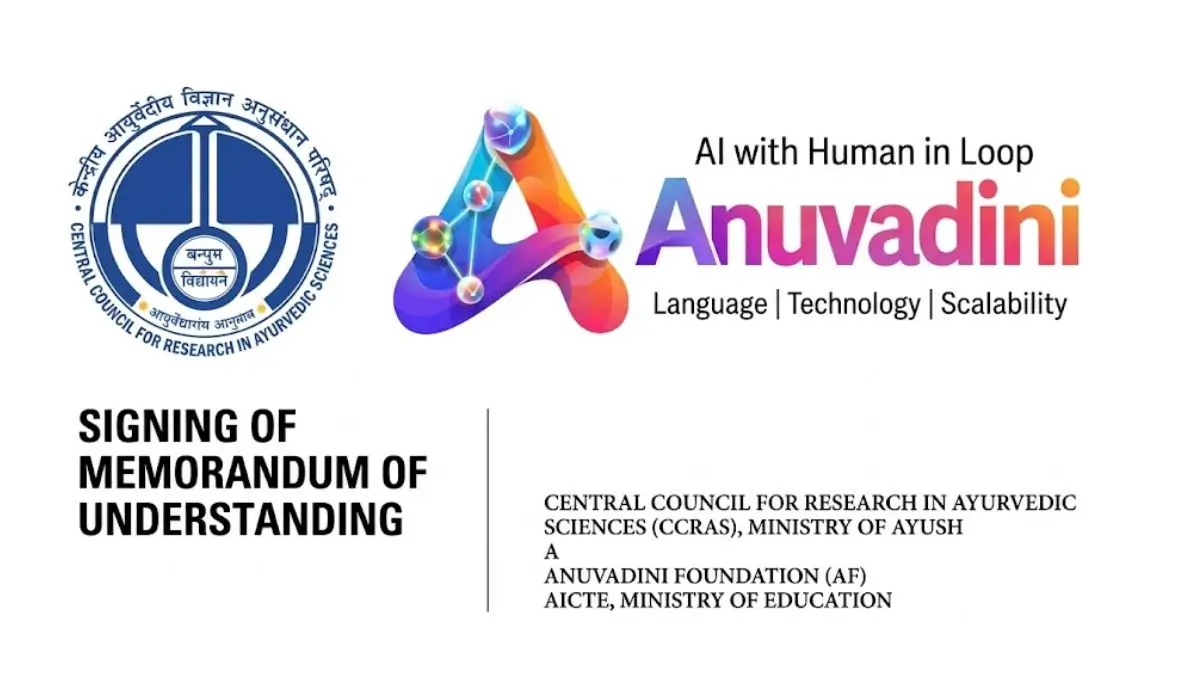
India’s latest AI-driven Ayurveda research translation initiative is revolutionizing access to ancient healthcare knowledge. The Central Council for Research in Ayurvedic Sciences (CCRAS) has partnered with Anuvadini AI to enable the translation of valuable Ayurvedic content into 13 regional languages. This groundbreaking effort aims to make Ayurvedic research more inclusive and accessible to a wider audience, particularly in a nation as linguistically diverse as India.
AI Driven Ayurveda Research Translation: A Transformative Initiative
The significance of this initiative lies in its ability to bridge the language barrier that often hinders the dissemination of Ayurvedic knowledge. By employing advanced AI technology in translation, CCRAS aims to ensure that the rich traditional medicine practices of Ayurveda reach people across various linguistic backgrounds, promoting broader understanding and usage.
Enhancing Accessibility Through Innovation
Ayurveda, a traditional healthcare system, holds vast potential for both preventive and curative purposes. However, its complexity and reliance on classical Sanskrit texts have historically limited its accessibility to scholars proficient in Sanskrit. The AI-driven Ayurveda research translation initiative seeks to democratize access to these texts, allowing regional populations to benefit from ancient wisdom. This effort to enhance understanding and accessibility is similar to how the accelerating AI economy reshapes global growth strategies.
Impacts and Implications for Future Research
Harnessing AI technology not only aids in translation but also opens doors for further scientific exploration and validation of Ayurvedic practices. As researchers gain wider access to translated materials, they can perform comparative studies and integrate Ayurvedic practices with modern medicine. Furthermore, this initiative positions India as a leader in merging traditional knowledge with contemporary technology, setting a precedent for other nations. This integration can be likened to how collaborative nutrition care reshapes healthcare education, promoting inclusivity and innovation.
In conclusion, India’s AI-driven Ayurveda research translation effort represents a pivotal moment in healthcare innovation, fostering inclusivity and catalyzing new research directions. By making Ayurvedic knowledge broadly accessible, the initiative empowers both local and global communities to explore the benefits of this ancient science.
Key Takeaways
- The initiative makes Ayurvedic research accessible in 13 regional languages.
- AI-driven translation democratizes access to ancient healthcare knowledge.
- Fosters integration of traditional and modern medicine through expanded research.
Medical Disclaimer
The information provided in this article is for informational purposes only and should not be considered medical advice.
