

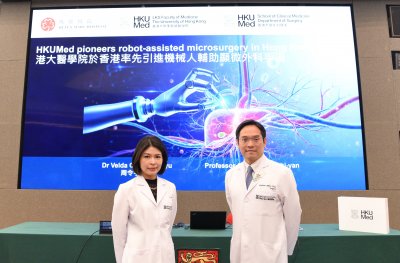
The advent of robot-assisted microsurgery in Hong Kong signifies a groundbreaking shift in the region’s medical landscape. This pioneering effort, led by the HKUMed research team, has already seen the successful completion of 48 procedures. Such advancements underline the transformative potential of robotics in enhancing surgical precision and patient outcomes.
Revolutionizing Healthcare: Robot Assisted Microsurgery in Hong Kong
Hong Kong is rapidly establishing itself as a leader in medical innovation with the adoption of robot-assisted microsurgery. This cutting-edge technology offers remarkable precision, allowing surgeons to perform intricate procedures with enhanced accuracy and control. Dr. Velda Chow Ling-yu and Professor Albert Chan Chi spearhead this innovative initiative, showcasing the dynamic progress in the city’s healthcare sector.
Benefits of Robot-Assisted Microsurgery
Robot-assisted microsurgery presents numerous advantages over traditional surgical methods. Firstly, the precision of robotic systems greatly reduces the invasiveness of procedures, leading to faster recovery times for patients. Additionally, this technology minimizes human error, enhancing the overall success rate of complex surgeries. As a result, patients experience improved outcomes, with lower risks of complications.
Implications for Hong Kong’s Healthcare System
The integration of robot-assisted microsurgery into Hong Kong’s healthcare system marks a significant milestone. It not only enhances the quality of medical care but also positions Hong Kong as a hub of medical excellence in Asia. As more procedures successfully employ this technology, there is potential for widespread adoption across various surgical disciplines. Consequently, patients may have access to state-of-the-art medical treatments, further solidifying Hong Kong’s reputation as a leader in innovative healthcare solutions.
Challenges and Future Prospects
While the benefits are clear, implementing robot-assisted microsurgery does come with challenges. High initial costs and the need for specialized training can limit its immediate widespread adoption. However, as technology becomes more accessible and affordable, we anticipate broader implementation in hospitals across Hong Kong. Furthermore, ongoing research and development efforts focus on enhancing the capabilities and applications of robotic surgery, promising continual evolution in this field.
In conclusion, robot-assisted microsurgery in Hong Kong is a testament to the region’s commitment to advancing medical technology. As this innovative approach to surgery becomes more widely utilized, it has the potential to revolutionize healthcare delivery, offering patients safer and more effective treatment options.
Key Takeaways
- Robot-assisted microsurgery provides enhanced precision and control in surgical procedures.
- Successful implementation in Hong Kong positions the region as a leader in medical innovation.
- Challenges like cost and training requirements need to be addressed for broader adoption.
Medical Disclaimer
This content is for informational purposes only and does not constitute medical advice.
