

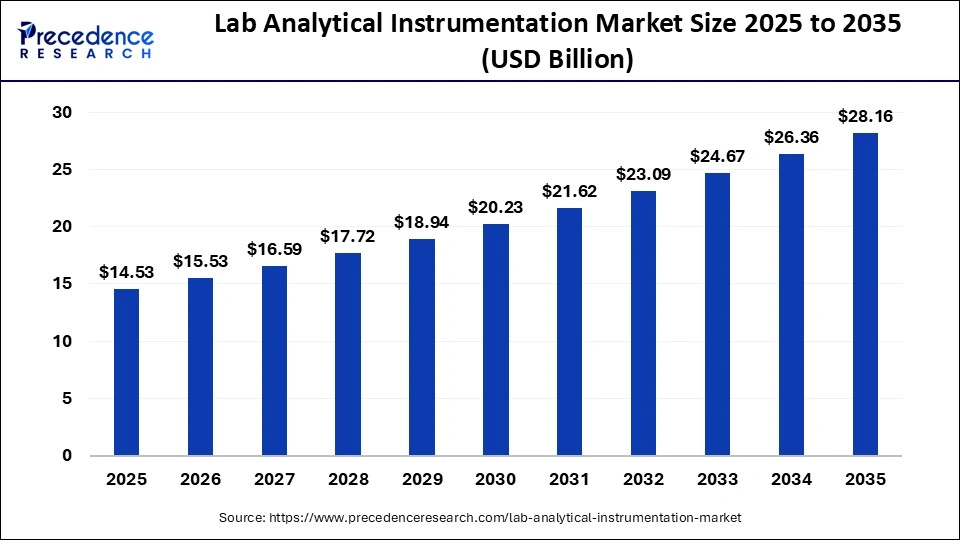
The global lab analytical instrumentation market is poised for significant growth, with estimates predicting it will reach USD 28.16 billion by 2035, a substantial increase from USD 14.53 billion in 2025. This expansion, at a compound annual growth rate (CAGR) of 6.84%, underscores the critical role that advancements in laboratory technology play in research and development sectors. Understanding the factors driving this growth offers essential insights for stakeholders in the industry, emphasizing the importance of strategic investments and innovation in laboratory equipment.
Growth Drivers in the Global Lab Analytical Instrumentation Market
The expansion of the global lab analytical instrumentation market can be attributed to several key factors. Firstly, the increasing demand for precise and efficient analytical methods in pharmaceuticals and biotechnology industries is a significant driver. As these sectors strive to innovate and develop new solutions, they require advanced instrumentation for accurate data analysis. Furthermore, regulatory requirements for testing and quality control have become more stringent, necessitating the adoption of cutting-edge technologies.
Technological Innovations Fuel Market Expansion
Technological advancements stand out as a major catalyst in propelling the market forward. For instance, the integration of AI and machine learning in analytical instruments has enhanced data processing speeds and accuracy. This not only improves laboratory efficiency but also supports complex research projects requiring large datasets. Additionally, the development of portable and user-friendly devices has broadened the accessibility of lab technology, enabling diverse applications across different sectors.
The Role of Emerging Markets
Emerging markets play a crucial role in the market’s growth trajectory. Countries in Asia-Pacific, particularly China and India, are seeing increased investments in their pharmaceutical and chemical industries. This boosts the demand for sophisticated lab instruments, as these regions aim to solidify their positions as key players in scientific research and production. The globalization of these markets introduces new opportunities and challenges, prompting companies to adapt their strategies to meet diverse consumer needs.
Strategic Implications for Industry Stakeholders
Investors, manufacturers, and researchers must navigate this dynamic landscape thoughtfully. To maintain a competitive edge, stakeholders should focus on research and development, particularly in areas like automation and digitalization of lab processes. Companies that innovate in eco-friendly and energy-efficient technologies may also capture significant market share, given the global push towards sustainable practices.
In conclusion, the global lab analytical instrumentation market is on a robust growth path. As technological innovations continue to unfold and emerging markets expand their capabilities, stakeholders equipped to adapt will find abundant opportunities. This growth not only reflects the increasing importance of analytical methodologies in research but also the evolving needs of a digitally-driven world.
