

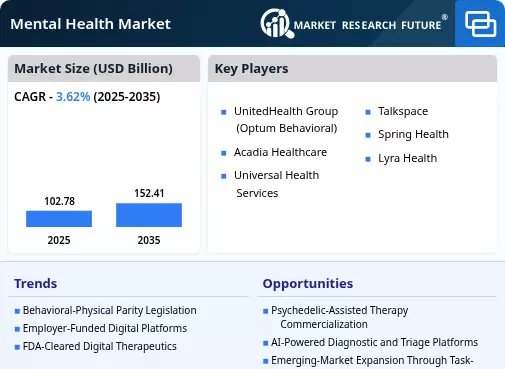
The mental health market is poised for considerable expansion, reflecting growing global awareness and investment in psychological well-being. As projections estimate the market reaching USD 152.41 billion by 2035 from USD 106.58 billion in 2026, it is vital to understand the factors driving this growth. Such rapid advancement emphasizes the ongoing demand and increased prioritization of mental health services worldwide, making it a key area for research and development.
The Rising Demand in the Mental Health Market
The mental health market is experiencing a renaissance, fueled by societal changes and an increasing understanding of mental health’s importance. People now recognize mental well-being as essential to overall health, prompting governments and organizations to allocate more resources. This sector’s growth is reflected in the steady rise of the market value, with a forecasted compound annual growth rate (CAGR) of 3.62% from 2026 to 2035. Additionally, technological advancements in healthcare are playing a significant role by making mental health services more accessible through telemedicine and mobile health applications.
Technology’s Role in Market Growth
The integration of technology into mental health services has drastically changed how care is delivered. As telehealth adoption increases, more individuals can access therapy and counseling services from the comfort of their homes. Technologies such as artificial intelligence and machine learning are enhancing diagnostic precision and personalizing treatment plans. Furthermore, wearable devices that track emotional and physiological responses are providing valuable data, thus enabling more proactive mental health interventions.
Focus on Mental Health Market Growth
The sustained focus on mental health initiatives by public health organizations is another vital growth driver. These organizations are campaigning to reduce stigma and encourage individuals to seek help, translating to increased demand for mental health services. Furthermore, private and public sectors are investing heavily in mental health research, aiming to develop innovative treatments and expand service availability. Notably, pharmaceuticals and biotech companies are pumping resources into researching novel therapeutics, which can potentially revolutionize mental healthcare. With ongoing interventions similar to those focusing on child anxiety, increased attention on mental health will drive market growth.
Forward-Looking Strategies and Implications
With the global community’s heightened focus on mental well-being, strategic investments in mental health infrastructure are pivotal. Policymakers are initiating comprehensive mental health strategies to meet the burgeoning demands. Therefore, healthcare providers must ensure their services are adaptable to the evolving needs of patients, while educational institutions should focus on training professionals equipped to handle this demand. Moreover, continuous advocacy and education will further dismantle barriers to accessing mental health care.
In conclusion, the projected growth within the mental health market underscores an essential shift towards prioritizing mental well-being on a societal level. The convergence of technology, policy support, and increasing awareness creates opportunities for innovation in addressing mental health needs, promising an optimistic future for both consumers and providers.
Key Takeaways
- The mental health market is projected to grow significantly, reaching USD 152.41 billion by 2035.
- Technology is enhancing access and treatment personalization, driving market expansion.
- Strategic initiatives by public and private sectors support ongoing market growth.
Medical Disclaimer
The content provided is for informational purposes only and does not constitute medical advice.
