

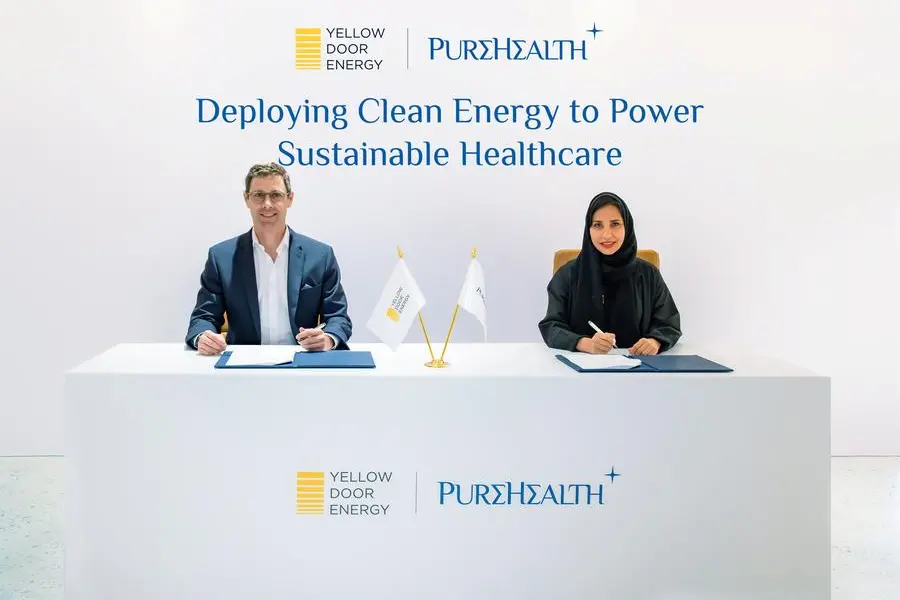
In a groundbreaking move underscoring the significance of sustainable energy in the healthcare sector, PureHealth has signed a 25-year solar lease agreement with Yellow Door Energy, explicitly embedding UAE healthcare solar energy initiatives into its operational framework. This visionary deal aims to generate 23.5 million kWh annually, directly supporting the UAE’s ambitious Net Zero 2050 Strategy and showcasing a pivotal shift towards environmentally responsible healthcare infrastructure.
This strategic partnership signifies not only a milestone for PureHealth but also a substantial advancement for renewable energy adoption in UAE’s healthcare landscape. Furthermore, as this initiative aligns with broader national sustainability goals, it highlights the nation’s ongoing dedication to integrating clean energy solutions to combat climate change.
UAE Healthcare Solar Energy Partnership: A Milestone Achievement
PureHealth’s collaboration with Yellow Door Energy marks a critical juncture in the intersection of healthcare services and sustainable energy. Specifically, this partnership commits to providing solar-powered energy solutions to numerous hospitals and clinics across the UAE. Moreover, as the healthcare network transitions towards renewable energy dependence, it reflects a growing trend of environmental consciousness within the industry at large.
Driving Sustainability in the UAE Healthcare Sector
This initiative underscores the UAE’s commitment to sustainability and health infrastructure modernization. Additionally, the solar lease agreement supports the national agenda of lowering carbon footprints, reducing dependency on conventional energy sources, and enhancing energy efficiency across healthcare facilities. Consequently, the partnership sets a benchmark for other sectors considering similar energy transitions.
Implications of the Solar Energy Agreement
The commitment to generating 23.5 million kWh annually represents a significant leap for PureHealth. Besides addressing immediate energy needs, it positions the organization as a leader in sustainable practices within the healthcare industry. The transition to solar energy not only aids in cost savings over the long term but also ensures that PureHealth’s operations contribute to ecological preservation. Furthermore, as hospitals and clinics adopt these green principles, they embody the paradigm shift toward sustainable health services.
As this solar lease agreement unfolds, it is critical to monitor its impact on both immediate energy savings and long-term sustainability goals. Future developments will likely reveal more insights into the efficacy and scalability of such projects within the healthcare sector. Therefore, as more healthcare providers consider following PureHealth’s example, the UAE stands poised to lead in sustainable health infrastructure, reinforcing its commitment to a greener future.
