

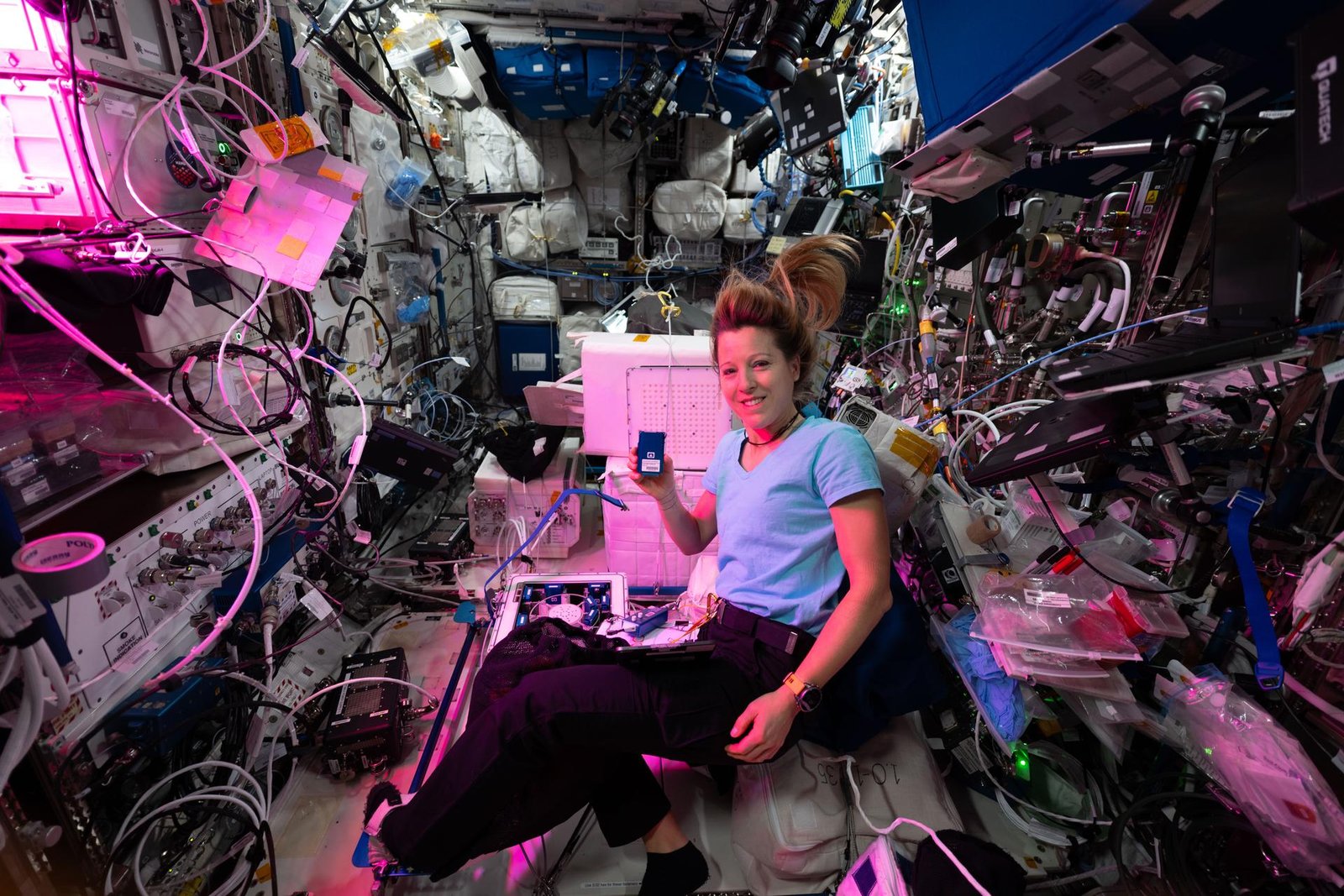
Aboard the International Space Station, 3D bioprinting health research is forging new frontiers in medical science. On Wednesday, this advanced biotechnology took center stage in the Expedition 74 crew’s science schedule. By integrating human research and microbial analysis, the team aimed to enhance health outcomes both in space and on Earth. The day’s activities also involved crucial spacesuit maintenance and cargo spacecraft operations, underscoring the diverse responsibilities shouldered by the team.
3D Bioprinting Health Research in Space
The focus on 3D bioprinting is anticipated to revolutionize healthcare solutions not only for astronauts but also for Earth-bound patients. This cutting-edge research allows scientists to fabricate tissues and potentially organs, paving the way for innovative treatments and preventive measures. The unique environment of the space station offers distinct advantages by facilitating unorthodox experimental conditions that terrestrial laboratories cannot match.
Microbial Analysis for Better Health
Microbial analysis plays a critical role in understanding the effects of long-term space travel on human health. By examining how bacteria and other microorganisms behave in microgravity, researchers can develop strategies to mitigate potential health risks. For instance, certain microbes may exhibit increased virulence in space, necessitating targeted interventions to protect crew members. Consequently, insights gained here might translate into improved public health measures back on Earth, which could align with broader strategies such as improving early detection in women’s health to prevent cognitive decline.
Human Research and Its Implications
Human research conducted aboard the space station encompasses a wide range of studies, from bone density loss to immune system function under microgravity. Therefore, the findings from these studies inform the creation of countermeasures that maintain astronaut health during prolonged missions. Moreover, this research provides valuable data that could enhance clinical practices and therapeutic solutions for conditions such as osteoporosis and immune disorders.
The Future of Spacesuit Maintenance
Effective spacesuit maintenance ensures astronauts’ safety and operational success during extravehicular activities. As missions grow in complexity and duration, evolving spacesuit technology will require ongoing innovation and testing. Notably, maintaining the reliability of these suits is indispensable for the success of both current and future space exploration efforts. Additionally, the knowledge gained could spur advancements in materials science and engineering disciplines.
The persistent quest for knowledge and innovation aboard the International Space Station holds great promise for transforming health science. The commitment to advancing 3D bioprinting health research exemplifies how space exploration can yield breakthroughs with profound terrestrial implications.
Key Takeaways
- 3D bioprinting in space enables groundbreaking biomedical research that could impact treatments on Earth.
- Comprehensive microbial analysis helps anticipate and mitigate health risks associated with long-term space travel.
- Ongoing human research aboard the ISS contributes significantly to medical science and potential therapies.
Medical Disclaimer
This article provides information based on current research and does not constitute medical advice.
