

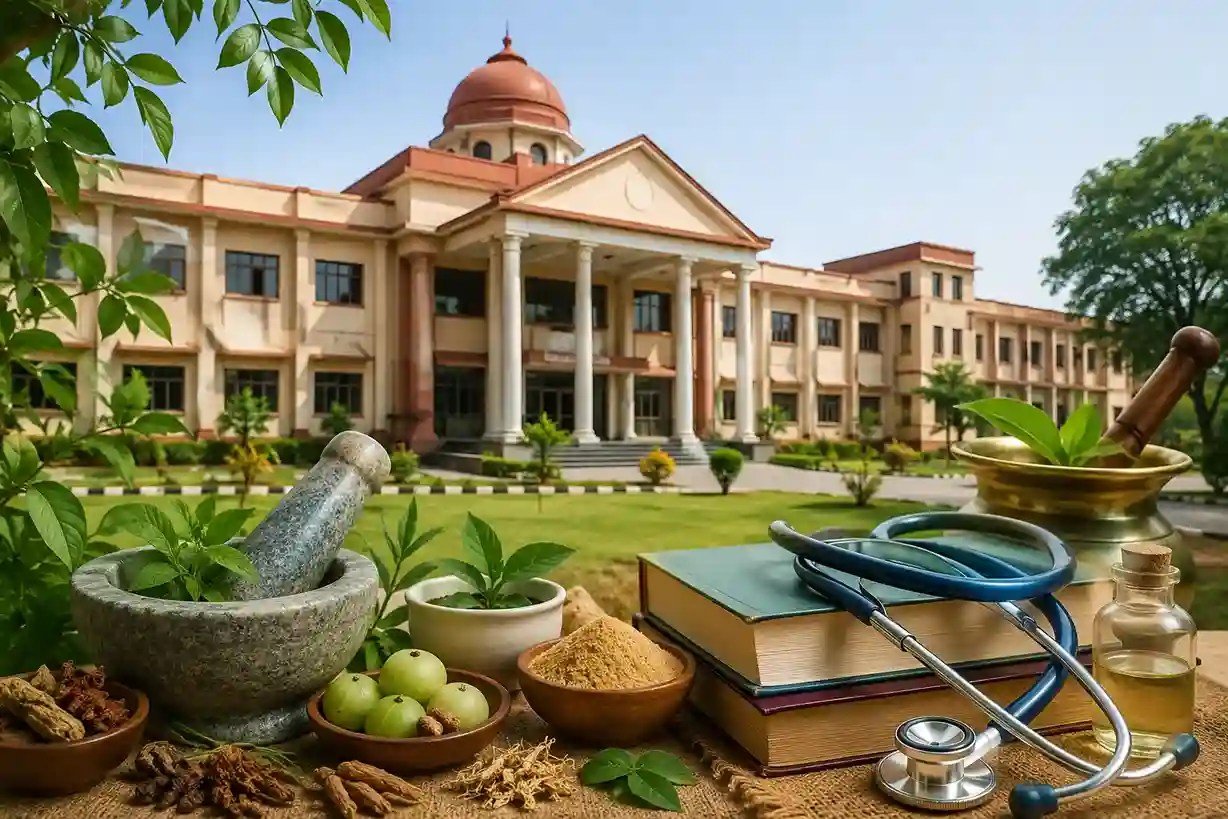
Tripura is poised for a significant educational and health advancement as it prepares to welcome its first Government Ayurvedic Medical College in Udaipur. This inaugural institution, promising 60 seats for the Bachelor of Ayurvedic Medicine and Surgery (BAMS) program, has garnered approval to commence from the 2026-27 academic year. As a result, the college is set to enhance the state’s AYUSH education framework, positioning Tripura on the map as a contributor to traditional medicine in India.
Tripura Ayurvedic College Udaipur: A New Dawn
The establishment of the Tripura Ayurvedic College in Udaipur signals a strategic investment in alternative and traditional medicine education. With the government’s approval, the college will accommodate 60 students annually, which marks a significant step in nurturing local talent in Ayurveda. This initiative aligns with the national emphasis on promoting AYUSH education, thus providing an academic arena for students interested in pursuing careers in Ayurvedic medicine.
Educational Impact and Opportunities
The Tripura Ayurvedic College Udaipur is expected to open new educational pathways for aspiring medical students within the state and beyond. Undertaking a BAMS degree at this institution will empower learners with in-depth knowledge of Ayurveda, integrating traditional wisdom with modern medical practices. Consequently, graduates will be well-prepared to contribute to the healthcare sector, particularly in regions where traditional medicine remains a primary form of treatment.
Boosting AYUSH Education
As India witnesses a resurgence of interest in Ayurvedic therapies, the Tripura Ayurvedic College Udaipur plays a pivotal role in elevating AYUSH education’s profile. By offering a robust curriculum, the college aims to maintain high educational standards while fostering research and innovation in Ayurvedic sciences. Furthermore, this development reflects the state’s dedication to supporting alternative medicine disciplines that complement conventional healthcare systems.
Regional and National Significance
The college’s location in Udaipur contributes not only to local development but also underscores Tripura’s commitment to educational excellence in New India’s health landscape. Additionally, by establishing this institution, Tripura affirms its readiness to support the national vision of universal health coverage, by incorporating traditional medicine as a viable healthcare option. This development is timely, given the evolving healthcare dynamics and the need for holistic treatment practices. Exploring how such traditional medicine practices can transform healthcare, recent efforts can also be observed in the Ayurveda clinical care models.
In conclusion, the opening of Tripura’s first Government Ayurvedic Medical College represents a remarkable advancement for both the state’s education system and the broader field of Ayurvedic medicine in India. The institution promises to enhance the state’s healthcare landscape, nurture future practitioners of traditional medicine, and reinforce AYUSH education as an integral part of the country’s medical framework.
