

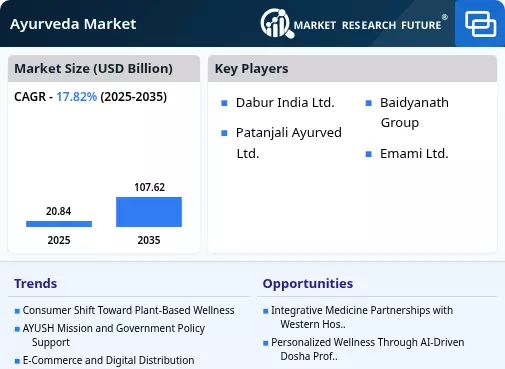
The projected Ayurveda industry growth to a market size of USD 107.62 billion by 2035 signifies a remarkable leap from USD 24.55 billion in 2026, highlighting a transformative period for this ancient healthcare system. This development matters significantly, as Ayurveda increasingly finds a global audience driven by growing health consciousness and a preference for natural remedies. The projection of a 17.82% compound annual growth rate (CAGR) from 2026 to 2035 underscores the industry’s accelerating momentum.
The Projected Ayurveda Industry Growth: A Deep Dive
The Ayurveda industry is amid unprecedented growth, attracting attention for its potential to reshape healthcare practices. This surge aligns with a broader trend towards holistic and integrative medicine, where consumers seek personalized approaches to wellness. The market’s projected valuation of USD 107.62 billion by 2035 reflects not just growth in numbers, but a shift in consumer mindset towards embracing traditional medicine forms as viable health solutions.
Factors Driving Ayurveda’s Popularity
The projected Ayurveda industry growth is fueled by several factors. Firstly, the increasing global focus on preventive healthcare highlights the demand for alternatives that prioritize balance and well-being. Additionally, greater awareness of the adverse effects of synthetic drugs is leading individuals to explore natural therapies. Furthermore, supportive government policies in countries such as India promote Ayurveda as a complementary healthcare option, thereby boosting its credibility and accessibility.
Technological Integration Enhancing Growth
Technology plays a crucial role in the projected Ayurveda industry growth. Technological advancements enable efficient manufacturing, quality control, and distribution of Ayurvedic products to meet rising consumer demand. Additionally, digital platforms facilitate better access to Ayurvedic consultations and product information. Consequently, the industry can reach a broader audience and maintain consistent quality standards.
Challenges and Opportunities
Despite promising growth, the Ayurveda industry faces challenges, such as the need for standardized practices and rigorous scientific validation. Research and development investments are essential to authenticate the efficacy and safety of Ayurvedic products. Conversely, these challenges present opportunities to integrate traditional knowledge with modern research, potentially attracting a wider demographic. Furthermore, the industry’s ability to innovate and adapt will determine its long-term success in the competitive healthcare landscape. The Central Sanskrit University BAMS pathway has unveiled a new educational track to further enhance the sector’s skilled workforce.
Finally, as the industry continues to expand, stakeholders must address concerns about sustainable sourcing and production to reassure a conscientious consumer base seeking eco-friendly options.
In summary, the projected Ayurveda industry growth indicates a forthcoming era where traditional medicine gains mainstream acceptance. The industry’s ability to adapt to modern demands while retaining its core values will be vital to its sustained success.
Medical Disclaimer
Information provided is for informational purposes only and should not be considered medical advice.
