

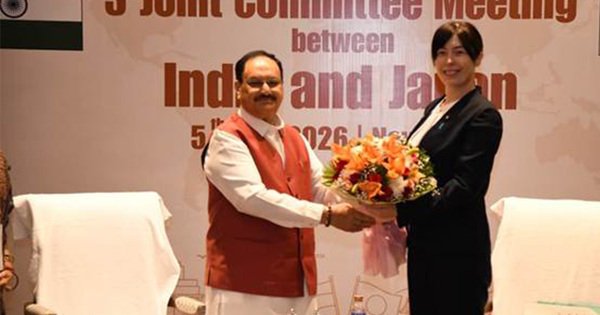
India and Japan have taken significant steps towards enhancing their healthcare partnership, as evidenced by the recently concluded 3rd Joint Committee Meeting on Healthcare in New Delhi. Co-chaired by Union Minister of Health and Family Welfare Jagat Prakash Nadda and Japan’s Minister in charge of Healthcare Policy, Kimi Onoda, this meeting aimed to deepen bilateral cooperation in the healthcare sector, driven by a shared commitment to improving health outcomes through the India-Japan Healthcare Partnership.
Nadda highlighted the historical foundation of the India-Japan relationship, emphasizing their century-long collaboration across various sectors. Furthermore, both nations are guided by the Memorandum of Cooperation in Healthcare and Wellness, which outlines mutual commitments towards strengthening health systems, enhancing accessibility, and fostering innovation. During the meeting, Onoda reiterated Japan’s ongoing dedication to advancing cooperation, particularly through innovation, technology, and research, thereby setting a proactive tone for future engagements.
Key Developments in the India Japan Healthcare Partnership
Presentations during the meeting covered several priority areas, with non-communicable diseases (NCDs) receiving considerable attention. India addressed the evolving burden of such diseases, outlining a response framework centered on screening, continuous care, and health promotion aligned with Sustainable Development Goals (SDGs). Meanwhile, Japan shared their initiatives in cancer screening and early diagnosis, emphasizing technical collaboration and institutional capacity building. These strategies mark a joint effort to curb the increasing prevalence of NCDs.
Supply Chain Resilience and Technological Deployment
India underscored its robust pharmaceutical and medical devices sectors by discussing strategies to strengthen domestic manufacturing, thus reducing dependency on imports and ensuring affordable access to medical products. Japan, on the other hand, illustrated its public-private collaboration model that aims to enhance medical supply chain resilience and deploy technology effectively through structured partnerships. This collaboration aims to make high-quality medical products more accessible to both countries’ citizens.
Advancements in Digital Health
Digital health emerged as another focal point of discussion, with India presenting its progress under the Ayushman Bharat Digital Mission. This initiative is dedicated to creating an interoperable and secure digital health ecosystem. In contrast, Japan’s advancements in digitalization encompass system integration and AI-enabled medical technologies, demonstrating the potential to improve health infrastructure significantly.
Human Resource Development and Exchange
The meeting also addressed human resource development, emphasizing the mutual benefit of exchange programs and joint training. India focused on its policy and regulatory ecosystem, which supports a globally competitive healthcare workforce. In parallel, Japan highlighted its cooperation frameworks that facilitate joint research and collaborative scientific engagements, thereby supporting the development of medical professionals across borders.
The deliberations ended with a renewed momentum for the India-Japan health partnership. Both sides expressed optimism about further strengthening bilateral cooperation to achieve improved health outcomes. The discussions have fostered a clear direction for developing resilient and inclusive health systems. As both nations look forward to translating shared intentions into meaningful actions, this meeting sets a strong foundation for future advancements in the healthcare sector.
Key Takeaways
- India and Japan are committed to enhancing cooperation in non-communicable disease management.
- Focus on digital health and human resource exchange can drive future innovations in healthcare.
- Collaboration promises robust healthcare systems benefiting both nations’ populations.
Medical Disclaimer
This content is for informational purposes only and does not replace professional medical advice.
