

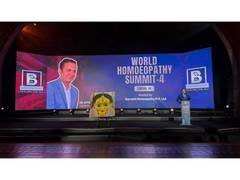
The recent World Homoeopathy Summit marked a significant stride in global healthcare dialogues, with Burnett Homoeopathy Pvt. Ltd. orchestrating a prominent event at the Palace of Westminster, Oxford University, and the Natural History Museum. This pivotal gathering not only showcased India’s leadership in homoeopathy but also solidified its position within global healthcare policies and practices.
World Homoeopathy Summit: A Step Forward
The World Homoeopathy Summit represents a vital platform where leaders and practitioners from various medical fields converge to discuss advancements in homoeopathy. This year’s event was particularly notable for its prominent venues. By hosting the summit in the British Parliament, Oxford University, and the Natural History Museum, organizers highlighted the growing acceptance of homoeopathy within traditional scientific and policy frameworks.
Strengthening Homoeopathy’s Global Standing
Homoeopathy has often been a topic of debate within the medical community; however, the summit’s distinguished location choices signify its increasing integration into mainstream healthcare discourse. The Palace of Westminster, synonymous with influential policy decisions, provided an apt setting for dialogues on incorporating homoeopathic practices into mainstream healthcare systems. Meanwhile, Oxford University and the Natural History Museum contributed academic weight, drawing interest from scholars and medical professionals worldwide.
Policy Implications and Healthcare Integration
As a result of the summit, policy discussions are expected to include broader perspectives on incorporating alternative medicine into conventional healthcare systems. This integration could potentially enhance patient care by providing diverse treatment options. Furthermore, the summit underscored the need for regulatory frameworks to support safe and effective uses of homoeopathy, addressing both benefits and limitations based on ongoing research. Discussions on healthcare integration are reminiscent of the needs for comprehensive dietary guidelines in studies such as the protein choices prediabetes study, emphasizing the diverse approaches to health management.
Global Collaboration in Homoeopathy
Another significant outcome of the summit was the reinforcement of international collaborations. Representatives from various countries participated in the discussions, highlighting shared goals of improving healthcare through alternative medicine. This collaboration aims to advance research, optimize regulatory practices, and ultimately offer more comprehensive healthcare solutions worldwide.
Key Takeaways
- The World Homoeopathy Summit has strengthened the global position of homoeopathy in healthcare.
- Holding the summit at high-profile venues underscores its integration into broader medical discussions.
- International collaborations aim to enhance the efficacy and safety of homoeopathic practices.
Medical Disclaimer
This content is for informational purposes only and should not replace professional medical advice.
