

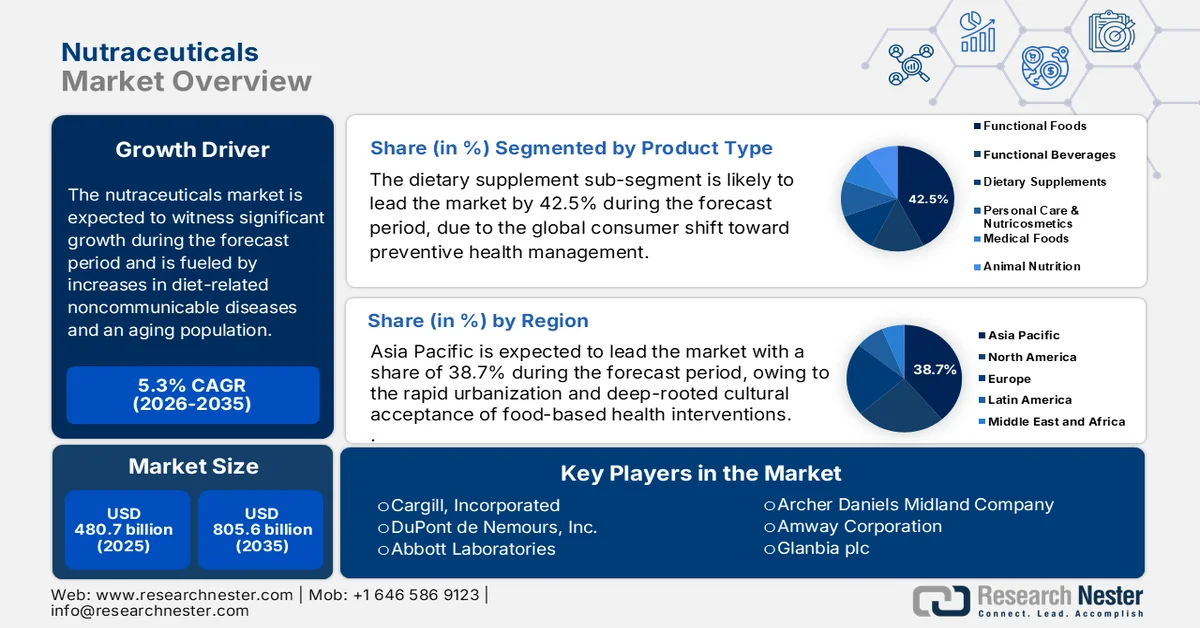
By 2035, Asia Pacific’s nutraceuticals growth is set to dominate the global market, capturing significant attention due to the region’s rapid urbanization and its cultural embrace of food-based health solutions. With the nutraceutical industry projected to swell from USD 480.7 billion in 2025 to an impressive USD 805.6 billion by the end of 2035, aspiring businesses and informed consumers are eager to understand the driving factors and potential impacts of this trend.
Asia Pacific Nutraceuticals Growth: A Rising Power
The Asia Pacific region is poised to hold a 38.7% share of the nutraceuticals market by 2035, harnessing centuries-old traditions of integrating wellness into daily diets. This cultural acceptance provides fertile ground for growth, as modern consumers increasingly turn to nutraceuticals to address health concerns. As urbanization accelerates, more individuals are exposed to varying dietary influences, adopting these nutritional products as part of their daily health regimes. Consequently, this shift enhances the buying power and evolving preferences of the population.
Cultural Influences and Market Expansion
Asia Pacific’s rich cultural legacy plays a crucial role in the expansion of the nutraceuticals market. Traditional medicine and dietary practices seamlessly intertwine health and nutrition, promoting a proactive approach to well-being. This backdrop fosters trust in food-based interventions, encouraging the continued integration of nutraceuticals into daily life. Moreover, as lifestyles modernize, a significant rise in disposable income is propelling market growth.
Driving Forces Behind Asia Pacific’s Nutraceutical Boom
Several factors significantly drive this burgeoning market. Firstly, increasing health awareness prompts consumers to seek products that enhance immunity and overall wellness. Furthermore, the expansion of e-commerce platforms simplifies access to nutraceuticals, supporting their seamless integration into diverse markets. Finally, regional regulatory frameworks provide a supportive environment for innovation, enabling companies to develop and introduce new products that cater to unique consumer needs. For instance, aligning with Traditional Indian Medicine Research’s growing support and scientific evaluation, there is room for collaboration between traditional and modern approaches.
As a result of these dynamics, businesses are motivated to invest in research and development, exploring plant-based formulations and personalized nutrition solutions that align with consumer demands. The growing interest opens the door for collaborations between traditional practitioners and modern scientists, further enriching the market landscape.
In conclusion, Asia Pacific’s anticipated dominance in the nutraceuticals sector underscores a significant transformation in health and wellness consumption. Companies and consumers alike stand at the brink of a new era in nutritional well-being, driven by cultural appreciation and modern conveniences. Embracing this trajectory promises substantial opportunities and advancements in health-focused innovations. Additionally, lessons from the success of modern Ayurvedic wellness products highlight the potential of integrating time-honored traditions with contemporary needs.
