

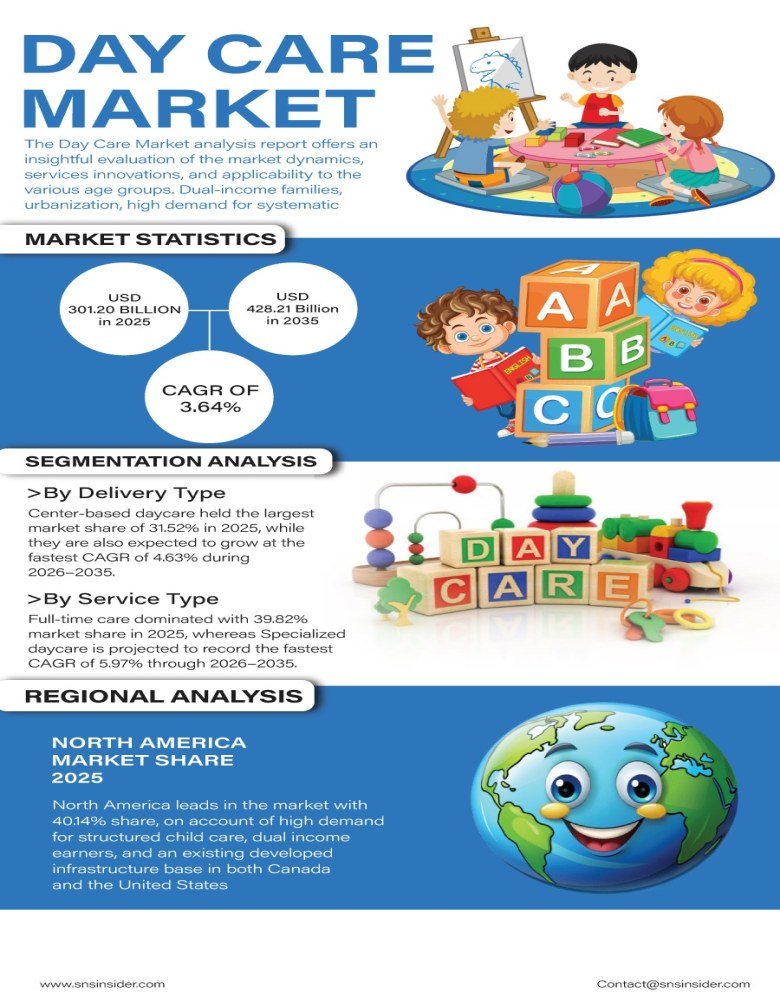
The escalating demand for employer supported childcare is a significant driving factor in the burgeoning day care market, projected to exceed $428.21 billion by 2035. This surge is underpinned by increased workforce participation and a growing emphasis on quality early childhood education. As more parents balance work and family, the role of employer initiatives in childcare becomes increasingly vital.
The Impact of Employer Supported Childcare on Market Growth
Employer supported childcare emerges as a pivotal influencer in the market’s expansion. Companies are recognising that facilitating childcare solutions is not merely a benefit but a strategic investment in workforce productivity. Consequently, businesses are implementing on-site daycare facilities, childcare vouchers, and partnerships with local childcare centers to alleviate parental stress.
The Role of Workforce Participation
With more parents entering the workforce, the necessity for accessible childcare options has intensified. Furthermore, employer supported childcare addresses this need by offering flexible, reliable solutions that enable parents to focus on their careers without compromising their children’s wellbeing. This approach not only boosts market dynamics but also enhances employee retention rates and job satisfaction.
Quality Early Childhood Education: A Demand Catalyst
Employers increasingly prioritize quality early childhood education within their supported childcare programs. This priority reflects a dual intent: aiding parents and investing in the future workforce. High-quality childcare centers stimulate cognitive development and social skills, elements crucial for lifelong learning. As a result, employer supported childcare programs must address both the caregiving and educational aspects to remain effective.
Economic and Social Implications
The rise in employer supported childcare goes beyond individual companies, impacting the broader economy and society. These initiatives enable parents to participate more fully in the economy, which can lead to significant economic growth. Socially, they promote gender equality in the workplace by supporting both maternity and paternity workforce re-entry. Consequently, organizations adopting robust childcare strategies contribute to a more inclusive and balanced workforce.
The growing trend of employer supported childcare is reshaping the day care market and fostering a more engaged, productive, and diverse workforce. As this trend continues, its effects will likely ripple across economic and societal spheres, setting a benchmark for future workplace policies and practices.
