

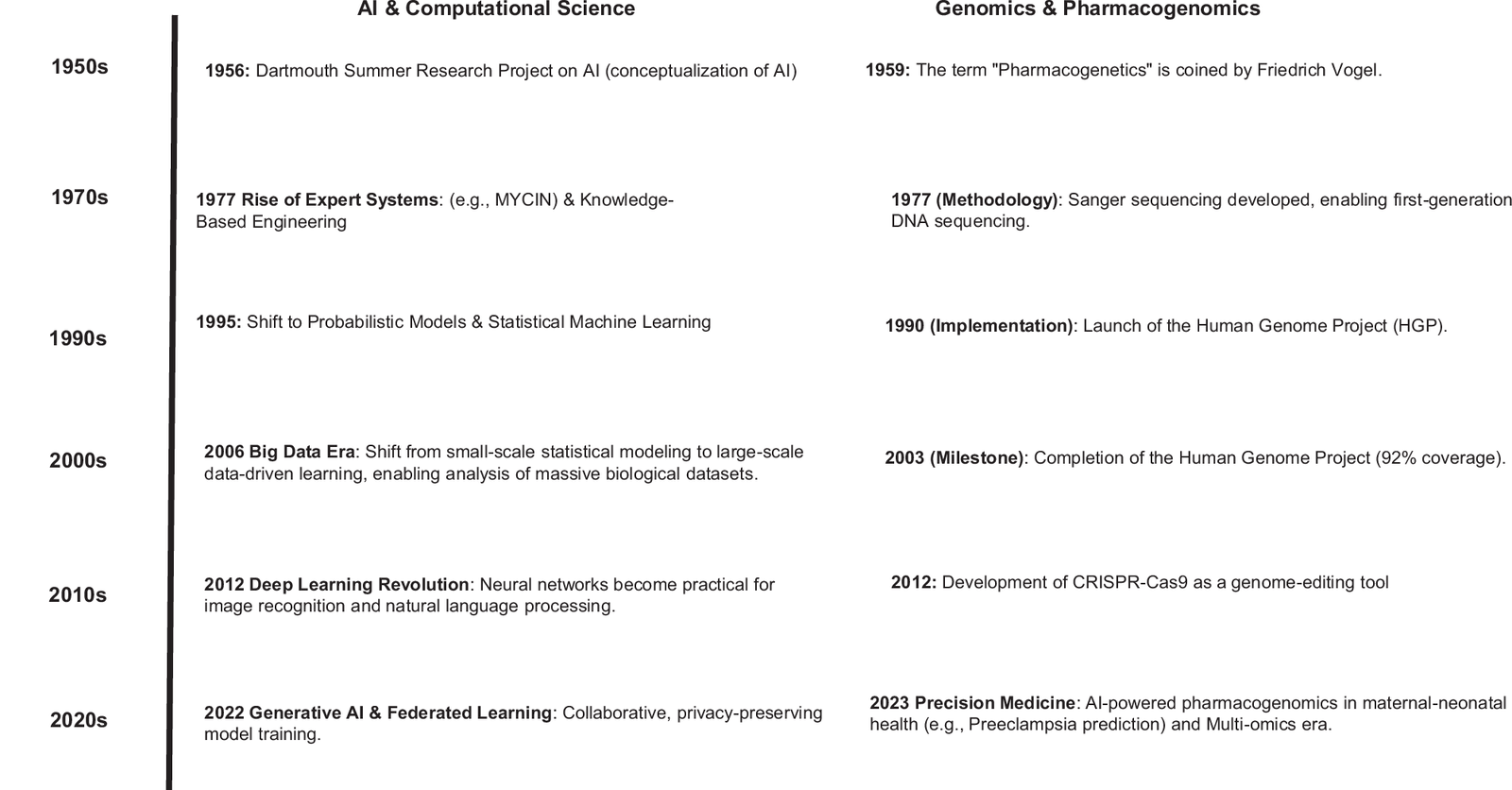
Artificial intelligence (AI) pharmacogenomics marks a crucial shift in maternal health, promising tailored healthcare solutions for mothers and newborns. As researchers delve into the complex interaction between genetics and drug responses during pregnancy, AI emerges as a pivotal tool to unlock personalized medicine’s potential in this vulnerable demographic.
Revolutionizing Maternal Health with AI Pharmacogenomics
The journey to integrating AI in pharmacogenomics for maternal health begins with understanding its transformative capabilities. AI leverages vast datasets to predict drug responses, which is particularly beneficial for pregnant women facing the ‘Pregnancy Black Box’—a term referencing the minimal pharmacogenomic guidelines available. This lack of data often hampers effective and safe drug prescriptions during pregnancy.
AI Pharmacogenomics: A Game Changer in Pregnancy
By employing AI, scientists can analyze genetic markers to predict how a mother and her baby might respond to medications, thus enhancing treatment safety and efficacy. For example, AI algorithms can identify genetic predispositions that influence drug metabolism, allowing healthcare providers to customize prescriptions effectively. This approach fosters a new era in maternal health, emphasizing precision over the conventional one-size-fits-all model.
Addressing Challenges with AI-Driven Insights
AI pharmacogenomics faces challenges, notably the need for extensive genetic data, which is often hard to acquire from pregnant populations. However, AI’s ability to synthesize limited existing data and generate predictive models is groundbreaking. Using these models, healthcare professionals can anticipate adverse drug reactions and adjust treatments accordingly. Consequently, this minimizes risks and maximizes outcomes for both mother and child.
The Global Roadmap for AI Pharmacogenomics
Establishing a global roadmap for AI-driven pharmacogenomics in maternal health necessitates international collaboration. Researchers advocate for comprehensive genetic databases encompassing diverse populations, ensuring AI models are inclusive and universally applicable. This global cooperation not only accelerates AI advancements in pharmacogenomics but also democratizes access to personalized maternal healthcare worldwide. Furthermore, ethical considerations, such as data privacy and patient consent, must guide this technological integration.
A 2026 publication emphasized the importance of integrating AI into pharmacogenomics to revolutionize maternal healthcare, highlighting its role in informed decision-making and improved drug safety. With continued research and collaboration, AI can significantly reduce the ‘Pregnancy Black Box’ effect, ensuring safer medication practices during pregnancy. Referencing related discussions in women’s health inequality provides insights into addressing genetic disparities on a wider scale.
Key Takeaways
- AI pharmacogenomics personalizes maternal health care, improving drug safety and efficacy.
- Challenges include data scarcity and ethical concerns about privacy and consent.
- Global collaboration and diverse data inclusion are crucial for successful implementation.
Medical Disclaimer
This content serves informational purposes only and does not substitute professional medical advice.
