

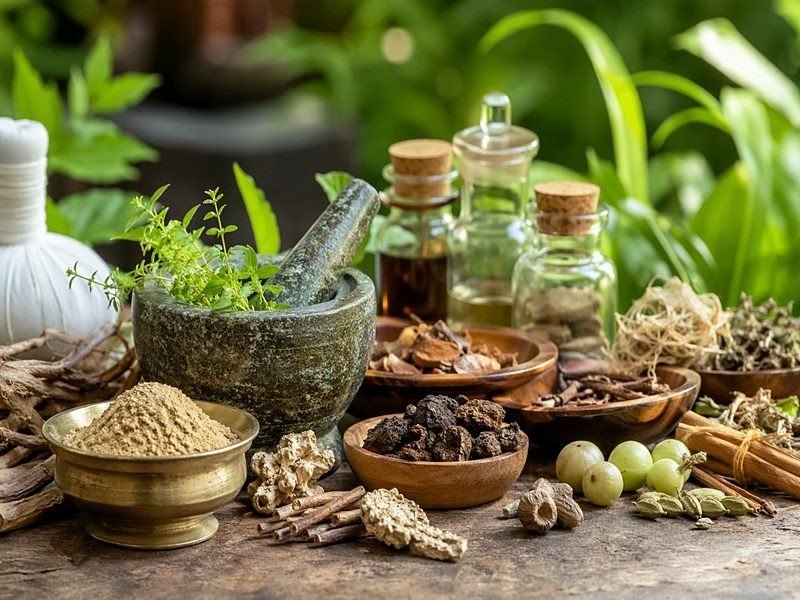
India’s strategic plan to integrate Ayurveda into global healthcare systems by 2047 marks a transformative era in traditional medicine. The report, “Strategic Roadmap for Making Ayurveda Global,” penned by NITI Aayog in collaboration with PwC, emphasizes Ayurveda’s potential to evolve from a locally prominent practice into a significant pillar within international health paradigms. This comprehensive initiative not only underscores India’s commitment to expanding its cultural heritage but also highlights the global shift towards alternative medicinal practices.
Global Ayurveda Healthcare Transformation: A New Horizon
NITI Aayog’s report outlines a phased approach to integrate Ayurveda on a global scale. Initially, the focus will be on enhancing the evidence base, thereby increasing trust and acceptance among international audiences. For example, this involves conducting rigorous clinical trials to substantiate Ayurveda’s efficacy and safety, aligning with global healthcare standards. India’s traditional system boasts a vast repository of knowledge that, when validated, can reshape global treatment protocols. Insights from other initiatives, such as the EMA’s gender analysis, reinforce the importance of aligning with global standards.
Strategic Phases for Ayurveda’s Integration
The phased approach includes improving research, fostering international collaborations, and creating a universally accepted regulatory framework. By collaborating with international health organizations, India plans to standardize practices and qualifications. As a result, this will streamline Ayurveda’s entry into foreign healthcare systems, enhancing both accessibility and credibility.
Implications for Global Healthcare
Integrating Ayurveda into global healthcare offers diverse benefits. Enhanced cross-cultural medical collaboration could lead to innovative treatment solutions, particularly for chronic ailments. Meanwhile, the promotion of holistic health approaches might address growing concerns over pharmaceutical dependency and Western medicine side effects. Consequently, Ayurveda could fill gaps left by conventional medicine, offering preventative care and addressing lifestyle-related diseases.
Addressing Challenges in Global Acceptance
The pathway to global integration is not without challenges. Critics often cite limited scientific backing, which hampers widespread acceptance. However, the transition will focus on meticulous research and training programs to equip practitioners with skills aligned with international healthcare standards. By addressing these challenges proactively, the initiative aims to bridge knowledge gaps and foster trust, promoting Ayurveda as a viable complement to traditional medical practices. The ongoing evolution, similar to efforts seen in the research sector, highlights a promising future for Ayurveda’s role in global health.
Ultimately, India’s vision to globalize Ayurveda by 2047 could revolutionize healthcare across borders. As research-backed evidence accumulates, Ayurveda may serve as a cornerstone in future healthcare innovation, blending traditional wisdom with modern scientific rigor.
Key Takeaways
- The “Strategic Roadmap for Making Ayurveda Global” seeks to position Ayurveda as a key component of global healthcare.
- Enhancing research and international collaborations are pivotal to gaining trust and facilitating global integration.
- The initiative addresses challenges by focusing on scientific validation and standardization.
Medical Disclaimer
This article provides informational content and does not constitute medical advice.
