

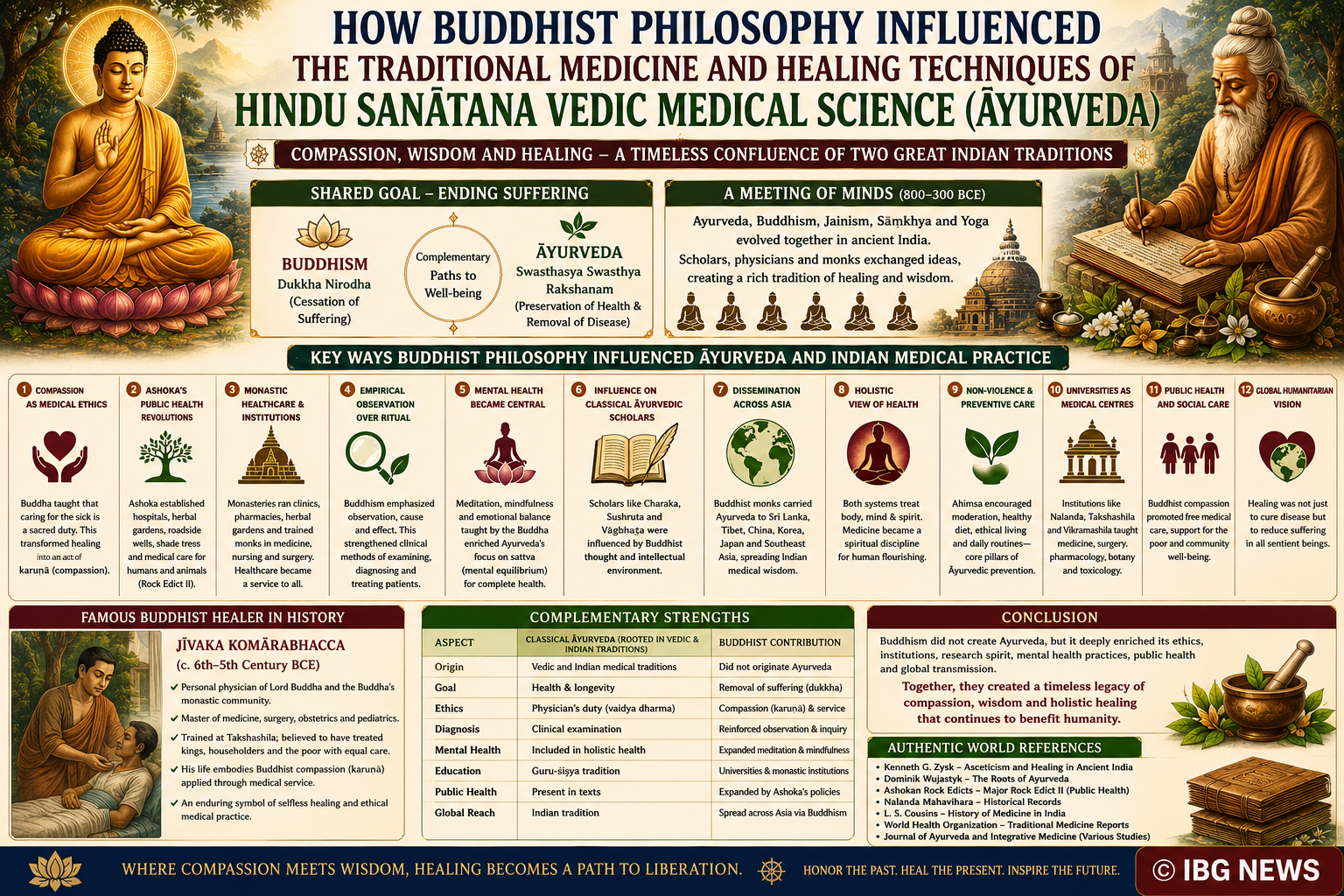
Buddhist influence on Ayurveda has shaped centuries of healing practices by intertwining philosophical perspectives with traditional medicine. The convergence of these ancient disciplines holds significant cultural and historical value. By examining how Buddhist doctrines interlaced with the Vedic medical science of Āyurveda, we gain insights into holistic healing approaches still relevant today.
Buddhist Influence on Ayurveda: A Harmonious Blend
The incorporation of Buddhist philosophy into Āyurveda marked a pivotal moment in the evolution of traditional Indian medicine. Followers of Buddhism emphasized compassion and mindfulness, principles that resonated deeply with the holistic essence of Āyurveda. This melding forged pathways for a more comprehensive understanding of health, encompassing mind, body, and spirit.
The Philosophical Synergy
One notable aspect of Buddhist influence on Ayurvedic practices is the emphasis on mindfulness and mental clarity. Buddhist teachings encourage a deep awareness of one’s thoughts and emotions, advocating for a balanced lifestyle. Consequently, Ayurvedic practitioners began to consider not just the physical symptoms but also the psychological state of patients when diagnosing ailments. This resonates with the growing demand in the mental health market, highlighting an increased prioritization of mental well-being.
Impact on Healing Techniques
Additionally, Buddhist monastic communities contributed significantly to the dissemination of medical knowledge. They established centers of learning that facilitated the expansion and refinement of Ayurvedic techniques. For example, meditation and ethical conduct, as advocated by Buddhism, became integral to treatments aimed at reducing stress and anxiety, thus promoting holistic healing.
- Integration of meditation practices for mental well-being
- Development of ethical healthcare approaches
- Promotion of balance between mental and physical health
The Legacy of Buddhist Practices in Ayurveda
Eventually, the blending of Buddhist philosophies with Āyurveda fostered a rich legacy that continues to influence contemporary healthcare practices. Modern Ayurvedic medicine still relies on principles such as balance, prevention, and individualized treatment—all of which echo Buddhist teachings of harmony and mindfulness. As a result, Ayurvedic practices integrate seamlessly into modern wellness strategies.
The intertwining of Buddhist and Ayurvedic teachings reflects a historical testament to the power of cultural collaboration. By exploring this fusion, we uncover a holistic approach to health that remains effective across centuries.
Key Takeaways
- Buddhist philosophies reinforced holistic approaches in Āyurveda.
- Buddhist and Ayurvedic integration prioritizes mental well-being.
- This synergy remains evident in modern wellness practices.
Medical Disclaimer
The information provided in this article is for educational purposes only and should not be considered medical advice.
